

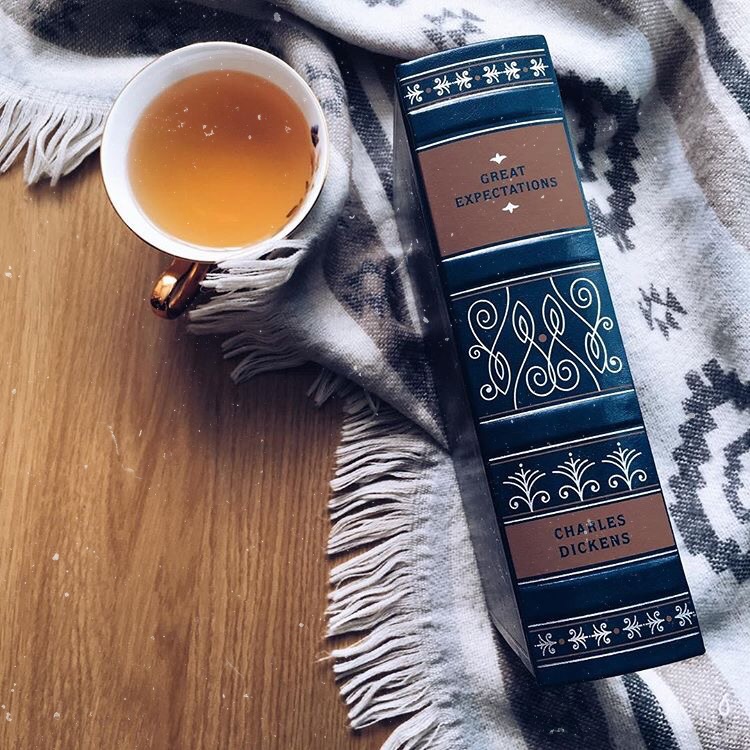
If you've felt the effects of the Instagram's algorithm recently, I understand. It's an inconspicuous being that wrecks how many unique visitors will see your posts but I have cracked several ways that will promise more engagement. My Instagram, @pardonmywritings, is a bookstagram. If you haven't come across the 11,969,203 posts under #bookstagram, they are styled photos of books. Some of the tips below therefore refer specifically to bookstagrammers.
1. Find your niche.
Find what ticks for you and make your page an expression of everything you love. For me that was books and the power of the written word hence my username, @pardonmywritings. You can only find what your niche is by experimenting however. I love to travel my city and always end up with a lot of photos of bookshops and parks in London. After posting about books strictly for a year, I had a sudden urge to share these other interests and I'm much happier with this amalgamation.
2. Interaction is key.
You can't expect to post a beautiful picture of The Wrath and The Dawn and gain a hundred likes in twenty minutes. Maybe in a pre-algorithm era. Legend has it that replying to comments beneath your post, interacting with pages you follow and commenting on posts under the hashtags you used within the first hour boosts your posts up on Instagram. Replying to comments also shows that you care that someone has taken the time to respond to your post. 'How do I get a lot of comments?' you may ask. Ask questions in your captions that will prompt responses. Questions like 'what's on your tbr?' or 'what did you think of Kite Runner?'


3. What you post matters.
This is said with a heavy heart because Instagram was (read: should be) about people expressing themselves. However it is really about posting your best selves. How many times do you retake the same photo? Or edit it with filters and apps? I'm guilty of all of this. Also, long captions without paragraph breaks can be a turn-off so capture attention with short engaging captions.
4. Good quality photos.
A clear and bright photo will be more eye-catching so use lighting to your advantage. I prepare and take most of my photos between 10am and 12pm when natural sunlight filters into my room. Others have purchased light boxes to take photos late in the day but again: experiment. Grainy or blurry photos are also not pretty but you don't need to sell a kidney to own a camera. I use my iPhone 6S and while I bought a camera, I'm still, urm, learning to use it. Editing will be your best friend if you know how to. I use three apps: Photoshop Express, VSCO and Afterlight. Experiment filters. Find a editing process. Stick To. It.

5. Consistency is important.
This refers to your feed. If your post carries someone to your page, having more posts in similar styles and colours will appear aesthetically pleasing when scrolling down. Maintaining your posting time and frequency means that your followers can expect your posts. I usually post daily, between 17:00 and 19:00, because more of my Western and Eastern followers are online and I'm free enough to respond to comments and generally interact on Instagram. It's okay if there is a day or two when you can't post but consistency is key.
6. Have something to offer.
Even though posts of Harry Potter and stacked bookshelves are an easy 1000-likes because they appear on the Explore page, strive for meaningful posts with something to offer. If you consider yourself a blogger, think of yourself as a business or a service. Posting about a book or bookish candle or second-hand bookshop are all recommendations - good or bad - that get people thinking they need to follow you. Be aware of trends and news in the publishing industry like which book was newly released, won the Man Booker prize or found itself in controversial debates. Doing all this may seem like a chore and you may decide you don't want your Instagram going in the direction but if you do, it seems more professional.


7. Be positive.
The important thing is to maintain a positive personality. It doesn't have to be fake but being positive means followers can approach you or are inspired by you. This may be hard especially when you feel disappointed that you're not getting enough attention in return for the effort you put into your posts. But you have to act as though the muggles haven't got you down. Believe me, complaining on your Instagram posts or stories that the algorithm sucks doesn't invite people to check out your posts. It may be out of pity but you want active followers, not sympathisers. If you feel uninspired, take a break from posting to regain motivation.
8. Hashtags are your friends.
Instagram usually allows thirty tags. Use a mixture of generic ones like:
#instagood #vscocam #photooftheday #literature #reading #books #bookish #booklover #bookworm #bibliophile #bookstagram #vscobooks #igreads #bookphotography #instabook #goodreads #blogger #currentlyreading #blogger #bookgram #classic #epicreads
But having smaller tags help to get your posts seen if you're a smaller account. I would change a few up based on every post such as including the book's title, author or publisher or the props you're using in your post for example #eating #nigellalawson #food #vintageminis #vintagebooks #penguinbooks #penguinstagram to start discussions with people reading or posting the same.

9. Use Instagram story for marketing.
To the best of my knowledge, Instagram Stories isn't affected by the algorithm in the same way as Instagram posts are. Stories is similar to Snapchat whereby your posts disappear after twenty-four hours. Every time you post to Story, your profile icon will appear at the header of yours and others' Instagram interface. A good way to promote a new post is to announce it on Story with fancy handwriting and stickers and again a couple hours later for followers who may have missed it. Stories are a great way to interact with followers in a way that doesn't restrict you to post a really good quality photo.
10. Getting partnership opportunities.
One of the most asked questions I get is how to establish yourself as a book blogger in order to get rep packages or free arcs from publisher or authors. It's not something that has happened to me overnight. I would say that doing all of the above helps establish oneself as a book blogger. Reviewing books, reading and having opinions whilst interacting with your followers promises to publishers, authors or literary companies that you're someobody who maintains an engaging page. Follower counts does matter to some sense because I was getting approached more after reaching 5000 followers but that is not to say someone at 2000 or 500 cannot work with an author or bookish shop.
I hope all those tips help! Let me know what you already know and what you're going to try. Whatever you try, I can't insist enough to make Instagram a reflection of YOU and what you love. What is your experience with the algorithm?
•Twitter – @pardonmywriting
•Facebook –
Pardon My Writings
•Blog - PardonMy Writings
•Goodreads –
Rima Rashid

