Tuesday, 20 June 2017

Author Feature | Anam Iqbal on The Whyte Divide


A special book came out into the world in April this year. Not only is The Whyte Divide a young adult, crime-romance novel but it is a saga involving betrayal, tests of loyalty, lust and loss, bonds of friendship, young love and romance. Nineteen year old Leonardo Whyte, one of the Whyte Brotherhood's best assassins, is on a mission to avenge his father's murder until he meets the daughter of his sworn enemy and must decide his own future. I'm passing the reigns over to Anam Iqbal today to talk about her inspiration behind the world of The Whyte Divide and her journey of becoming a published author as a person of colour:

My love of writing stemmed from freedom.

As a child, I was incredibly shy and often struggled to voice my thoughts and opinions: they would either stay buried deep inside or expressed on the pages of diaries. When I wrote, it felt like magic, like anything was possible and not a single dream was out of my reach, like I could express whatever I wished without any judgment at all. It was simply freedom.

However I’d never thought about sharing my work with people: my writing was always a grave secret, one that I guarded fiercely and kept ever hidden; my heart would shudder at the mere thought of someone reading my work over my shoulder. It wasn’t until the age of seventeen that I reflected on this secrecy and tried to understand why I was so reluctant to allow any light to shine on my creativity.

It was then that I realised I had never before read a book by someone of colour, someone of a non-white background, someone who wrote about non-white characters. And because of that, I’d simply begun to believe that people of my background, skin colour and religion didn’t write books, didn’t exist in epic stories and that my work could never be good enough to be published.

That was a turning point for me: the realisation that there were such self-doubts, negative thoughts, fears and stereotypical views about my own identity holding me back from achieving my dream – which was, in fact, to one day write something adventurous, rich and beautiful and share it with the world. It was thus at the age of seventeen that I decided to write my first novel. I was doing my A Levels at a London college at the time and was inspired, on a bus ride home, with the idea for The Whyte Divide, a Crime Romance novel. It was a stressful year with plenty of essays, revision and workload, and the gangster love story in my mind became an escapism for me.

I spent the next few years writing about the intense, riveting, sexy and dangerous characters in my mind. I carved out their features, personalities and ambitions on the notes app in my mobile, in my diary or on the sides of lecture notes at university. And when I was unable to do any of these things because of my hectic life as a student, I simply daydreamed of Leonardo Whyte's scheming smirks, Eleanor Archer's skill with blades, Faith Hunter's fierce female strength and Denzel Whyte's ruthlessness as London's most powerful drug lord. 

Through the diverse characters in my novel, I was able to express so many of my own thoughts as well as those I’d heard from the mouths of others: moral dilemmas, social pressures, alienation, the desire for an epic young love, the longing to discover truths, the reality of living in a diverse world, and most of all the thrill of going on an adventure… After eight years and much editing – which included writing the entire novel from scratch four times! – it was finally published and made available to the world. It was truly a dream come true: a dream that required a lot of hard work, patience and – perhaps most importantly – self-belief.

There are certain writing tips I’ve picked up from my experience of completing and publishing my debut novel, and I’d love to share them with other writers:
  • Draft the story in as much detail as you can before you start writing. Having a solid draft of where the story is heading will give you the motivation to keep going and it also means less rewriting ahead!
  • Plot your story without fear. The fear of being judged will limit your creativity and may even lead to Writer’s Block! And even if you find a way to continue writing, fear will distort your character’s voice and make it inauthentic. Therefore stay away from any negative, judgmental energy (or thoughts) whilst writing. Find a positive writing space for yourself – this is very personal, and can be absolutely anywhere!
  • Start writing. Sometimes you have to do this even when you don’t feel ready, or else you’ll never start. You can always edit a bad page but you can’t edit a blank page.
  • Don’t get bogged down in the editing process as you write. It will slow you down a lot. You can always go back to edit later. Separate the process of writing and editing into two different stages. (The editing process itself is lengthy and most writers have extensive re-writing in store for themselves, so keep that in mind as well. Completing the first draft by no means indicates that your work is done!).
  • Set yourself a target of how much writing you wish to do everyday, and monitor yourself to achieve it. If you write based on whim alone, chances are you’ll never complete your novel! The truth is that completing a manuscript is painstakingly hard work and requires dedication: sparks of inspiration or your burning passion to write won’t always be there to accompany you. (The final draft of The Whyte Divide was 170,000 words and I had to ensure that I worked on it consistently everyday for a year in order to complete it).
  • Work hard but also be kind to yourself. Remember to set yourself realistic writing targets because if you don’t, you are only setting yourself up to fail, which will lead onto negative thoughts and feelings of failure. Keeping a positive outlook is perhaps the MOST IMPORTANT thing to keep you going. And whenever you do finish a chapter or section you had planned to, treat yourself and be proud of your work!
  • Self-belief. Whilst writing a book, you will undoubtedly experience many highs and lows. Some days, you’ll think that your novel is surely a unique and compelling masterpiece; other days, you’ll feel that you’re wasting your time on writing a pile of rubbish that no one would ever want to read. And it doesn’t get much easier when a writer completes their manuscript, for most writers experience abundant rejections from literary agents and publishers, who are simply in a highly competitive business. But it is important to never lose hope. Never stop believing in the beauty and power of your words. Writing is deeply subjective, and there will always be someone out there in the world who resonates with your work. Who knows, next time it could be the perfect literary agent for you, or you could self-publish your novel to find a large online readership that was just waiting for something your novel delivered!
  • Never stop dreaming. Your manuscript’s every sentence can be stunning and lyrical, but it won’t mean anything if your story has no heart. Dreaming is the secret ingredient to bring life into your writing. Dream both while you sleep and are awake. Experience as much as possible, speak to abundant people, read widely, do strange things, love deeply, feel openly, let your imagination run without bounds. And it is through these experiences that you will breathe life into your characters and their journey.

It requires a lot of hard work to write a book – and writers do it without any knowledge of whether they’ll ever get any compensation for their time and effort. But most writers don’t write with the thought of what they’ll get in return, they write because they feel a burning sensation within themselves pushing them to write, and when they ignore it, they feel it nagging at them until they pick up their pens. In my opinion that is all you need to call yourself a writer – to feel that nagging sensation. Give in to it, and I promise it will be worth it in the end. 

It is such a beautiful feeling to be here now, so many years later, as an adult, when my novel is published. Now, I am able to turn back to the seventeen-year-old girl that I was, who had dreamed of writing a book some day, and tell her that I made it, that I didn't give up, that I managed to ignore all the voices that told me I couldn't do it (including my own at times), that I pulled through all the lonely nights writing and busy days editing all for her: the teenager who once sat on the top deck of one of London's famous red buses, on her way home from a long day at college, when her wild imagination took her somewhere else entirely...

Anam Iqbal

The Whyte Divide is available to order from Amazon now. 

Tuesday, 6 June 2017

The Lines We Cross in Ten Powerful Quotes


You might have heard that Randa Abdel-Fatah came out with a new book in May 2017. I positively squealed. But that's because I had read her previous book, Does My Head Look Big in This? nine years ago about an Australian Muslim teenager who decides to wear hijab to school. It was amazing but I hadn't read anything by Randa since. Until The Lines We Cross came along.

Randa's new young adult novel is about two teenagers on opposing sides of the immigration conflict in Australia. Michael's parents are part of Aussie Values - an anti-immigration group - whilst Mina's family have fled their besieged home in Afghanistan. As the group's importance grows in Australia, lines are drawn and both must decide what matters most.

I absolutely enjoyed this quick read. The humour aimed at misguided characters and time spent on exploring some serious stereotypes and issues surrounding terrorism, the hijab, refugees to name a few complimented each other to make The Lines We Cross a highly topical book that everyone needs to read now. Below are some of my favourite quotes drawn from the book that either had me furiously nodding away in agreement or made my heart lurch in sympathy and sadness:

Kahn’s carrying a spade in one hand and a sign in the other: Start Calling a Spade a Spade: Islam = Terror. Andrew’s dressed as a Spartan guard, carrying a shield and sign that says: Democracy Started in Greece: Protect Our Democracy. p. 2

~

Paula huffs with indignation. “So Hiroshima, Nagasaki, Guantanamo Bay, Abu Ghraib, bombs on Afghan weddings and parties, CIA torture, drones, white phosphorous–all wonderful examples of civilized behavior, right?” p. 33

~

Mum lets out an exasperated sigh. “That’s half the problem though, isn’t it? When my parents came here they got called poms, so they made sure us kids fit in.” She raises her eyes to the ceiling. “You can’t wear the hijab, get a negative reaction, and then complain. You have to take responsibility for yourself and think: How are people going to treat me? Am I inviting trouble?” She shakes her head sadly. p. 20-21

~

Maybe you only get one chance at meeting somebody who really gets inside you, wakes corners of your mind and heart that you didn't know were asleep. p. 272

~

“You know what the trick is?” she says when we hear the bell ring and reluctantly rise and make our way to home-room. “Learning that it can’t always be about them. Sometimes, maybe even most times, you fight back. But sometimes you can end up dignifying their arguments when you defend yourself. And even if you’re in the right, it’s exhausting to live your life in constant resistance. You have to keep a space to yourself, Mina, a space where they don’t exist." p. 144

~

“Dad says Muslims are violent. So of course he should be scared. But you know, our bird was run over by a car in our street last year. Death is everywhere, not just in Iraq.” p. 72

~

Was part of our contract here in this country that we should be walking around depressed and broken? Wearing our trauma on the outside? And what about everybody we’d left dead or living in fear back home? Didn’t we owe them? How could I just lead this ordinary life? p. 174

~

“Because there’s a dominant culture, Michael,” Dad explains. “We’re an Anglo nation based on Judeo-Christian values. People are free to practice their culture and religion so long as it doesn’t undermine the foundational identity of this country.” p. 162

~

There’s a lot of ugliness under this sky. But there’s plenty of beauty here too. I want to find it, spread it around, all over the cruelty and injustice. I want to shake this world like a can of soda, pop the lid, and watch the bubbles explode. Join a revolution to do nothing less than change the world. p. 375

~

“It’s like all these nameless, faceless people get killed all around the world everyday amd nobody gives a shit because they’re not Aussie or American or French, you know what I mean? It’s like dying and getting killed is just something people like us do. It doesn’t shock anybody. If we live, then people are surprised.” p. 287

Hopefully, from just these quotes, you can see how well written The Lines We Cross. It serves a great read in today's political climate whilst still being entertaining as you gush about young love. 


Will you pick up The Lines We Cross? Have you read similar books that you can recommend? ~


Saturday, 20 May 2017

Author Interview: Nicola Yoon | Everything, Everything


I got to interview Nicola Yoon LIVE on my Instagram Story last month courtesy of
Penguin Platform. The author of Everything, Everything and The Sun is also
a Star was visiting London to promote the newly adapted Everything, Everything movie. 

If you are unfamiliar with it, check out the trailer here. Everything, Everything is about
teenager Maddie, allergic to the world, until she meets her next door neighbour
who shows that there is more to life beyond the four walls of her home. 
I asked Nicola on her inspiration for the book, how we can read more diverse literature
and what it's really like being on a movie set and more. Read what she said!


Having rushed into the office situated in Piccadilly, I waited as Nicola finished off a interview for Youtube. This was the perfect opportunity for me to acclimatise, watch Nicola and catch my breath. I was up next. She extended a hand in greeting with a wide smile and soft American accent. Immediately, I felt less anxious as we discussed how I would record the question first, then record her answer and upload later on Instagram Story.

Rima: Hi guys, so I'm here with Nicola Yoon, and I'm about to do a live Q&A with her. So if she could say hello now...
Nicola: Hi guys! 

Rima: Everything, Everything is a unique concept. What was your inspiration behind it?Nicola: So, I was writing when my daughter was four months old and I was a very nervous mom. Urm, so that was the inspiration. I basically tried to figure out what life would be like for a girl that you treated as an infant because you had to and then I switched it to the girl's point of view.

Rima: Do you write characters based on your self?
Nicola: Urm...no. I don't. Urm, I write characters based on little parts of myself, but mostly from friends or family.

Rima: Have you written any other novels in collaboration with other writers? If not, would you like to, and with who?
Nicola: So, I haven't written anything in collaboration but I've always wanted to with my husband. We actually met in graduate school and we're totally going to do it! *grins excitedly*

Rima: Do you have a special time to write, and how is your day structured?
Nicola: From four to six AM in the morning, and then my little girl wakes up and we do, like, mommy stuff and then I write again from nine to two in the afternoon.

Rima: What would you say are the main advantages and disadvantages of self publishing and being published the conventional way?
Nicola: So, I've always been published the conventional way. I think one of the main disadvantage sf self-publishing is just that distribution - some publishers have a big network that they can send the books out to.

Rima: What advice do you have for other writers who want to portray diversity but are worried that they'll be playing into stereotypes?
Nicola: You know, when you're writing, make sure you're writing characters and not caricatures. And if you're writing about a cultural group outside of your own, get someone inside that group to read it so that they'll tell you about anything that's harmful or problematic.

Rima: What other diverse books would you recommend?
Nicola: I'd recommend The Hate You Give by Angie Thomas, More Happy Than Not by Adam Silvera, All American Boys by Jason Reynolds and Brendan Kiely, We Are Okay by Nina LaCour, ohh gosh, anything by Jacqueline Woodson!

Rima: As a writer, I often go through stages where I don't feel like my book will ever be ready. What gave you the final push or inspired you to submit your first book?
Nicola: I was working at a job that I really hated and I had my little girl and I had a moment when I realised I would tell her if she should pursue her dreams when I wasn't pursuing mine. And that was really the bug push for me to say, 'okay, I'm going to try'.

Rima: How do you over come a writing slump?
Nicola: Video games. *laughs* Basically the trick is to do something else and let your subconscious mind work on it. Urm, usually if I have one of those (writer's block) it's because I made the characters do something wrong so I have to delete, delete, delete until I get to the right spot.

Rima: So you're part of the #weneeddiversebooks campaign. What do you think we need to do as readers, and as publishers and writers to forward that campaign and make sure that more diverse books are being published?
Nicola: So, as readers, just read more diversely. You know, check out what's on your shelf and try to get more diverse book titles. Urm, but we need more publishers and agents and editors, sort of in the pipeline, so that we get more diverse books in the end.

Rima: So, how excited are you from one to ten are you about the film, the cast? And what was it like being on set?
Nicola: So, I'm about a twelve on the excitement level! Umm, and being on set was great. We have a cameo in the movie so look for us. We're 'family on the beach', we go by in two seconds but we're cute! Heck, we're cute!

Rima: And finally, describe Everything, Everything in six words.
Nicola: Uh....what would you risk for love?

And, that's a wrap! I just wanted to say a huge THANK YOU to the people at Penguin Platform for inviting me. And to Nicola for putting up with my questions and signing my books. It was my first time interviewing someone but I'm honoured to have been a part (albeit infinitesimal) of getting word out about this quirky and diverse Young Adult to the world. 


Everything, Everything is out now in cinemas in US. Soon to be released everywhere else. It's one of my most anticipated movies of 2017 because of the cast (Amanda Sternberg and Nick Robinson) and the trailer had me hooked. The Everything, Everything soundtrack on Spotify and SUPER FUN emoji trailer just show how entertaining it will be. Positively perfect for summer!

Have you read the book? Are you going to watch the film? What do you think of the cast?

Sunday, 23 April 2017

The Discovery of Belle Books ~ a play


I need to gush about a bookshop that I discovered in the enchanting book town of Hay-on-wye when I visited in the last week of March. Hidden away behind Broad Street through the passage beside Outcast Books, lies a modest house with a charming sign, Belle Books.

It's the experience upon entering that warmed me to my core. So much so that it's best I share it in the form of a scripted play. *proceeds to write a play after five years*

The Discovery of Belle Books

- a play


Characters


Rima
Sahiba (Rima's friend)
Brian (Belle Books owner)
Customer 1
Customer 2
Customer 3
Customer 4
Customer 5


It is thirty past eleven in the morning. Rima and Sahiba, finding the bookshop next door closed grow curious about Belle Books. Sahiba enters first while Rima holds back to take a photo of the clocktower at the centre of Hay town that stands behind. Rima then hurries in and finds Sahiba mid-conversation with an elderly, tall man with shocking white hair. 

Sahiba: So I was looking for books by her; do you have any?
Brian: (moves to the shelf behind her). Agatha Christie! Oh yes, I have some right here...let me see...oh yes, here we have some.
Sahiba: (walks over to browse the Christie shelves). Oh I already have some of these.

Brian stands around. Rima's eyes roam everywhere, feeling overwhelmed by the many bookshelves to begin looking. She faces Brian.

Rima: I was looking for vintage books on Robin Hood or King Arthur. Do you know if you have many? (half-muttering to herself). I don't know where to start looking...
Brian: Robin Hood? King Arthur?
Rima: Yes, I really like the legend of Robin and King Arthur...
Brian: Robin Hood? (rapidly walks to the fantasy section) I have some here I think... I placed it here on Tuesday...Robin Hood...oh! perhaps it may be in the science fiction...
Rima: (following him, she looks to the shelves on her right). yes, I can see some Lord of The Rings books...
Brian: Or, maybe there may be some in Classics...hmm. Oh, that's Joyce...Austen. Let me see... I may have something here... (walks to the counter that is adjacent to the shop's door) This is...ah yes, this is Robin Hood and His Merrie Men.

Rima, who has followed behind him, is taken back by the beauty of the simple yet elegant hardback that Brian has handed to him. Crimson in colour. It's light-weight. Short despite the hardcover. It feels like leather to the touch but whether fake or real, she could not tell. 

Rima: Oh my, thank you so much. This is beautiful! 
Brian: (without registering the gratitude and looking around the shop). There will be more books on King Arthur. You can try the classics and science fiction but also check between the maps and Penguin paperbacks. 
Rima: I will, thank you very much.
Brian: (noticing people approaching the shop though the large panes of the door, Brian leaps out to greet them). Welcome! Welcome to Belle Books. 

Smiling, Rima turns away from the door and walks towards the bookcase filled with orange and blue Penguin classics against one wall. Not recognising any of the titles, she fleetingly glances at the science fiction books. She had spotted several editions of the Lord of the Rings wedged in between more familiar and unfamiliar books earlier. Another bookcase stands perpendicular to the wall of bookcases. Agatha Christie at the top and a few Young Adults at the very bottom. 


A group of young people entered the shop. Sahiba and Rima had left them in the book passage earlier. The shop grows louder with several voices. Rima moves to look at the Classics again.

Customer 1: (glancing over everything slowly) Oh this place is very neat!
Customer 2: (slowly) It really is.
Customer 3: (browsing the Classics, he picks up a book) I found this for you Danielle.
Customer 2: (excitedly) Let me see...oh, I already have that, I probably shouldn't add more...
Customer 4: (smirking) Or how about Fifty Shades of Grey?


All laugh. Rima smiles to herself and goes to find Sahiba. Brian is reading out loud from a book to Sahiba. Rima takes her a phone out and begins recording.

Brian: (fist clenched and moving animatedly). 'Jesse feared to say, 'I hope I will go see the safer bridge of Tay!' But when the chain came nearer to Burmed's Bay, Boris he did a loud and angry bray that shook the central girders of the bridge of Tay. Last summer was 1879.'


Rima and Sahiba applaud him, amazed.

Rima: That was amazing.
Sahiba: It really was. (takes a book out of her bag). I'd love it if you could read something by Agatha Christie.
Brian: Of course I can. (looks up to see both girls posed with their phones) Oh, what's this now? I can't read it!
Rima: Oh please, will you? Your reading is great.
Brian: (with a smile on his face but fingers fidgeting). 'Wednesday's special chip day returned. Miss Marple, thought precisely... (noise in shop overpowers his voice) collected certain data. Currie, Louise and I corresponded after a fight when there's been a large matter of Christmas cards, oak calendars.'

Brian finishes reading, looking rather embarrassed as more customers joined in to listen.

Sahiba: Thank you for that.
Brian: You're very welcome. (looks at something behind Rima) Shall I help you price these up?

Brian serves customers. Sahiba and Rima gush about how lovely Brian is. Rima spots a shelf full of Sherlock Holmes books. Browses them. Sahiba is busy on her phone.

Rima: Oh, I think I'm definitely going to buy some of these Sahiba. I already have an old edition of The Casebook of Sherlock Holmes.
Sahiba: (looking up). They look good.
Rima: (contemplative). See, I have the entire collection of Sherlock Holmes stories that Penguin published. I bought it for class when I studied Victorian Fictions last year but it's really big and I'd like to own individual, smaller books.
Sahiba: You should definitely get them then. He has 10% discount if you spend more than £10.00.
Rima: Okay, I will. (looks at the large shopper's bag at Sahiba's feet) Have you paid for your books?
Sahiba: (excitedly). Yes, I have. But...look how heavy...it is...how am I supposed to carry this back to England?
Rima: Hah.

Rima goes to pay for her books. Brian is talking to another gentleman with a farmer's cap on. He pauses to count her books.

Brian: That will be £11.70, thank you.

Rima hands him money.

Brian: (resuming conversation). And so you see, I'm the last of the Teviotdales.
Customer 5: (laughs) But there is the sheep... Teviotdale sheep. And there's a pie named after you is not there?
Brian: (nodding). Yes, there is the Teviotdale pie. But I am the last. You see... brings out a map of the Border Marches of England and Scotland; he taps the centre of it). This is where my ancestors lived. They were driven out by the Northerns and scattered everywhere. And I am the last one of them.
Sahiba: (listening). That's a very interesting story.
Rima: (nodding). And now we shall be off. But thank you for everything Brian. It's been a pleasure to meet you. You own a beautiful shop.
Brian: Thank you for coming by!

Rima and Sahiba thank Brian several more times and proceed to leave the shop. After snapping pictures of exterior, they walk down Broad Street Centre with the widest smiles on their faces.

The end ~


I hope you can see how charming Belle Books was, made brilliant by it's enigmatic owner, Brian. He is one of those individuals that you never forget. His passion for the books is so clear and pure in the way he's driven to help you find something or recommends books in such a passion, you know he's read each one. 

If you're ever in Hay-on-wye or passing through Wales, I urge you to stop into Belle Books**. Alternatively, you can come down to Hay for 10 days between March 30th and April 8th which will see the largest gathering of book bloggers. More information on the event page, Bookstagram Hay. Brian is expecting to close his shop this September for personal reasons and I really hope that won't be the case. Everyone needs to know about his bookshop!

Do you have a favourite bookshop? Is it in your hometown or in another part of the world?


* The Bookshop Spotted series is where I share bookshop discoveries. Check out the previous 'Spotted': Jambala Bookshop! 

** Belle Books address: 15A Broad St, Hay-on-Wye, Hereford HR3 5DB

Thursday, 30 March 2017

Revive Your Heart, Nouman Ali Khan | Book Review


Happiest of happy release days to Revive Your Heart by Nouman Ali Khan. 

A stunning collection of spiritual lectures that are both current and thought-provoking, Revive Your Heart: Putting Life into Perspective is Nouman Ali Khan's first book and I'm so glad it exists. I've followed his lectures and conferences on Youtube for a few years now and he is hands down one of my favourite Islamic teachers.

Revive Your Heart was written to suggest how Muslims can find peace in chaotic times. In a world that revolves around technology, social media and globalisation, it is easy to get distracted and disheartened by every day life. As a Muslim myself, Nouman Ali Khan's book was as much comforting as it was eye-opening. His thoughts on the way Muslims continue to favour sons over daughters as appalling was a refreshing thing for a young woman who has been exposed to such experiences whilst his call to collectively condemn terrorist attacks that hijack the name of Islam was a reassuring confirmation that the Muslim ummah (community) could be unified under this global issue.


Divided into five key parts, Revive Your Heart delves into the issue with Connecting to Allah through Du'a, Creating a Cohesive Muslim Community, Our Financial Dealings, Some Contemporary Issues and finally, Focusing on the Akhirah. The chapters are very short therefore I would recommend reading the book in parts. This way, you're able to treat each topic individually, allowing time to process it, maybe even discuss with those around you, just like as if you were to watch one of his youtube videos. I really felt like reading Revive Your Heart became a brief period amongst the assignment deadlines every week where I could spend valuable time reflecting on myself, my behaviour towards those around me and most importantly, my connection to God. 

Favourite parts! 

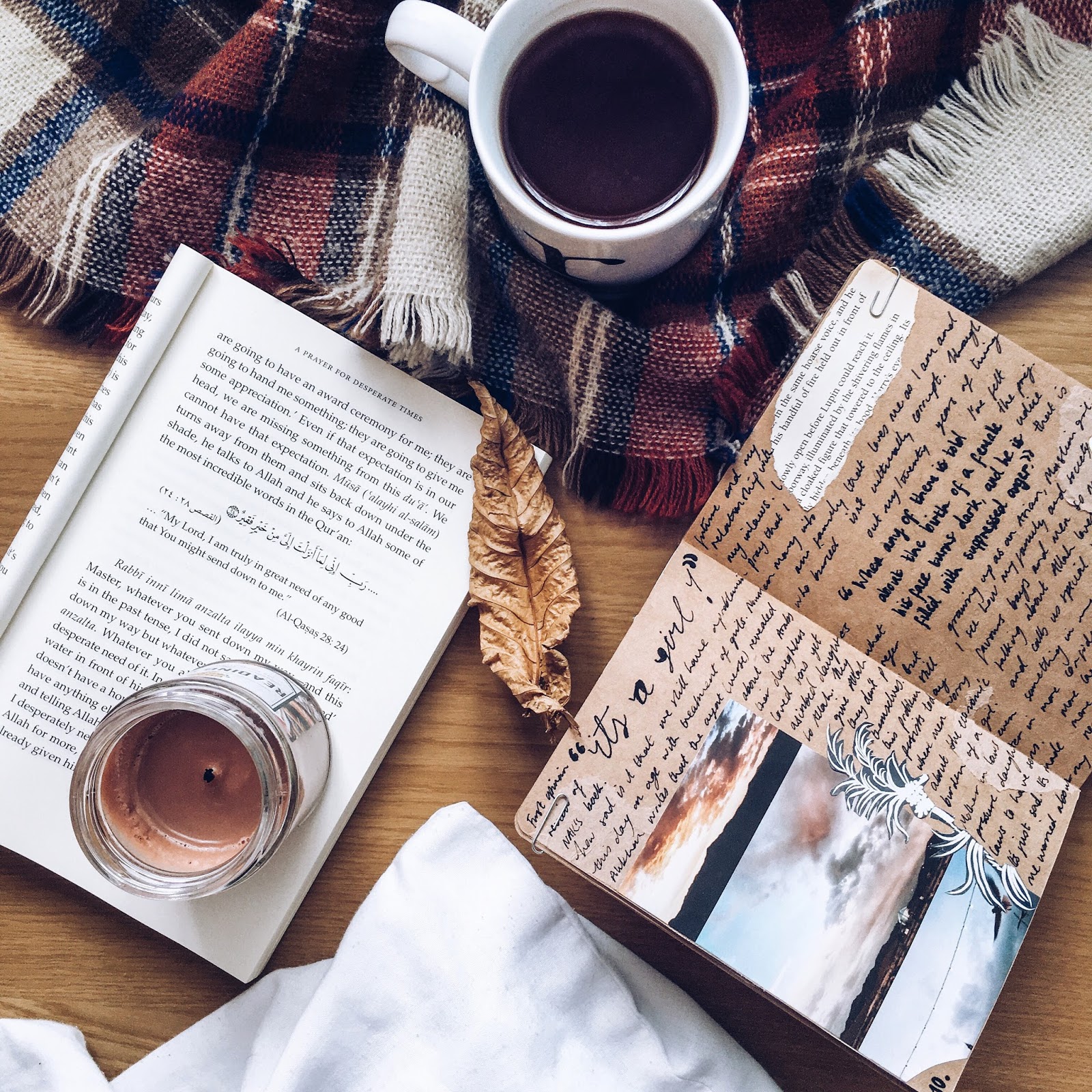
This is a book that interestingly works much like the format of Nouman Ali Khan's youtube videos. Just as easy as it is to copy>link>share his talks, I found myself snapping pictures of poignant passages midway through reading and either posting them on Snapchat, Insta-story or sending them to friends. Some of my favourite quotes are:

The believer recognises that whatever Allah gives you, whatever food He puts on the table, whatever job you found, whatever business you're doing - not only is it good enough, you desperately needed it. You don't get to be fussy with Allah and tell him, 'Ya Allah, I don't know if I want this one'. You don't get to tell Allah, 'I know You provided me this rock or this tree to sit under but if You could provide me some kind of bedding, it would be better'. 'I know You gave me this water over here but maybe some coconuts might help.' No, no, no. Whatever You have given me, is exactly what I needed and I desperately needed it. 
- from A Prayer for Desperate Times p. 15.

It's an honour Allah gave to these girls that are born in our households... I'm reminded - Allah has blessed me with four daughters... but I will tell you something: I had two daughters in a row, and then when my third daughter was born I was really happy. And I got a bunch of doughnuts and I went to the masjid. For I'sha, I'm just going to give everybody doughnuts because we had a girl again. This brother came outside the masjid and he said, 'Oh doughnuts? What happened? Good news?' I said 'Yeah, it's a girl' and he said, 'in sha Allah, next time.' That's what he said - 'in she Allah, next time' - and I wanted to slap him!'
- from It's a Girl! p. 158.


And any people, any people including Muslims when they are insulted, when things they hold sacred are insulted, they have a right to be offended. We have a right to be offended. We have a right to be insulted that is part of our dignity. If it didn't hurt our feelings it would mean we have no dignity... I have a right to be angry but those are two separate issues. What's happening in the media now is these two are being made into one issue... No, no, no; for the Muslim it's not that simple... we are against people who are killed unjustifiably and we stand against those who killed them unjustifiably... but at the same time we have a right to be offended by that kind of ignorant and hateful speech; and we will speak out against it and we will stand against it. 
- from Thoughts on Paris (Charlie Hebdo) p. 179.

One thing I have always appreciated about Nouman Ali Khan is his honesty. You can tell when something seriously grieves him in his videos just from the way he talks or when something ridiculous cracks him up. It's the same for Revive Your Heart

This book is the perfect addition in your life to reflect during the quiet hours. Get your copy from Amazon or Kube Publishing now. 

*** Will you be getting a copy? What other spiritual/lifestyle book have you read? ***


*A copy of Revive Your Heart was provided for review. Words are my own. 

Sunday, 26 March 2017

Is an English Degree Useless? | Responding to Outlander's Diana Gabaldon


Dear Poodles,

I'd like to get something off my chest (figuratively). A few weeks before, Outlander author Diana Gabaldon replied to a fan on Twitter asking advice on her selection of a major. She claimed she was an aspiring writer hoping to study English to which Gabaldon tweeted: 

English major = “Want fries with that?” 🍟. Pick something that will give you enough money to write what you want.

As an English undergraduate in my third and final year, I took serious offence. I may just be overly emotional since my last ever seminar as an undergraduate was this Friday and so the next time I see my lecturers and friends will be on the day of our graduation but. that. was. not. okay. I'm more disappointed with Diana Gabaldon than angry because I love her Outlander book series (the two that I've read so far) and I used to thank her every other day for blessing the fictional universe with the character of Jamie Fraser.

To add insult to injury, Gabaldon decides to explain herself (badly) on twitlonger.com:

ENGLISH MAJORS, in 140 CHARACTERS (or less) So, yesterday, as I was driving from Santa Fe to Scottsdale, I (cont)

Everything wrong with what she said:

> The insult to food service industry:
For some employers in this industry, the job is their main source of livelihood. 

> Highlighting that two of her children completed English degrees but one took a nursing degree soon after and the other is a successful novelist and comic book writer despite not viewing the degree 'of value [...] to someone who wants to write for a living.' 
While I am an aspiring writer - have been since the age of ten - I did not necessarily choose to study English because it would make me an overnight bestselling author the second my graduation cap was flung into the air. That's not what happens. Nor does it happen to any other degree - unless you have an internship secured at Penguin or KPMG in the months prior (good on you).

> Suggesting any occupational degree is better than one in English because the practical skills are desired for employment. 
The critical and analytical skills that I have honed at university mean that I can read or hear a piece of information from the news or social media and form my own judgement. My ability to skim/speed read or balance reading several texts play to my advantage when it comes to deadlines as a journalist or presenter. Knowing also how to tailor my writing in an email or letter or over the phone comes from assignments set up as blogs, essays or blurbs.

> Boasting the 'five university degrees' between her husband and herself and the abundance of choice her children had before going to college. 
It's clear that Diana Gabaldon comes from a privileged background and that's grand and all but many students do not possess the luxury or funding to be so carefree. In the current political and economic climate, university fees are only getting more expensive making the choice of 'the degree' even more important (and stressful).

> Thinking the content of her dabble in an English minor from the 70s has remained somewhat similar to English degrees in 2017.
After three years at it, I can proudly say that my degree has been one of the most valuable things I've done so far. I'll explain how. Yes, we read three or four novels, plays or poems a week that range from the Medieval, Renaissance, Postcolonial (my favourite) and modern age but the exposure to the 'cultural history' as Gabaldon phrases it is far greater now in a world that is demanding more diversity in literature and institutions alike. This representation varies across universities but it is the one that I attended in East London that made me 'woke'. A popular term originating from the 2013 'Black Lives Matter' movement, 'woke' is used to describe someone who thinks for themselves and is aware of how racism, classism and sexism affects our daily lives.

Some of the best books that I've discovered came through my degree (and I'll update this post-graduation). They are:
- Dreaming of Baghdad by Haifa Zangana (about the psychological trauma of Iraqis under Saddam's regime)
- Things Fall Apart by China Achebe (breaking racial prejudice surrounding rural Africans)
- The Inheritance of Loss by Kiran Desai (which highlights the beauty and difficulty of migration).

Was anything she said right?

Diana Gabaldon should have saved herself the trouble and just replied to the aspiring writer in 140 characters that no degree guarantees immediate stardom (if I just did it, she can). An English degree is as useful as any other degree. The world needs scientists and engineers just as much as it needs historians and artists. 

I've always known that writing is a precarious lifestyle but if you've made it, YOU'VE MADE IT. However, having spoken to and being friends with several rising authors through my Instagram account, they frequently advise to have a stable job unless you're happy to eat takeaways for a long time. That's all sound, USEFUL, advice but discouraging a fellow writer from studying English is not. Especially when for many, the desire to write stemmed from a love of literature. How can you separate the two?

Study English. Or study what your heart (and reason) wills.

*** Did you study or are you studying an English degree? What did you make of Diana's tweet? ***


Sunday, 12 February 2017

Author Interview: S. Jae Jones | Wintersong

Hey poodles! I have a rather exciting post to bring you today. As some of you may or may not know, the stunning and lyrical debut Wintersong by S. Jae Jones was published by Titan Books on the 7th of February 2017.

Read the synopsis:


All her life Liesl has been enthralled by her grandmother's old tales of the Goblin King; a beautiful, dangerous figure who enraptured her spirit and inspired her musical compositions. Now aged eighteen, Liesl can't help but feel her musical dreams and childhood fantasy are slipping away. But when her sister disappears Liesl find herself once again drawn to the figure that haunts her childhood memories as she journeys deep into the Underground to save her. 

Impressed with the mystical plot and lyrical writing, I decided to interview S. Jae Jones or JJ, as she likes to be called, to explore her inspiration behind the magical world of Wintersong. Here's what she had to say:

"Hello JJ! Thank you for taking the time to answer these questions. I first fell in love with Wintersong’s synopsis and, sure enough, it turned out to be the enchanting firecracker it promised to be."

"Where did the inspiration for Wintersong come from?"

"Wintersong is essentially a culmination of a lot of things I love: gothic stories, Underworld tales, Mozart, the movie Labyrinth, the trope Death and the Maiden, etc."

"The epigraph of Wintersong is from the popular poem, Goblin Market by Christina Rossetti. Were you influenced by any mythical stories or folktale legends before writing Winterising?"

"I’ve always liked fairy tales, folklore, and myths from all parts of the world. I’m the most familiar with western stories, and the one that influenced Wintersong in particular was the story of Der Erlkönig, or the Germanic “king of the fairies.” Der Erlkönig comes from a long line of fey figures related to the Underworld, such as Gwyn the Hunter and the Herla king/hellequin.

But there are many other myths and fairy tales woven into Wintersong: Little Red Riding Hood, Beauty and the Beast, Hades and Persephone, Orpheus and Eurydice. Many of these relate back to the trope of Death and the Maiden that had always fascinated me as a child."

"Music is important to the main character, Elisabeth, in the way she understands her worth in the world and uses it to operate within the Underground. Do you have a soundtrack of songs you listened to whilst writing Winterising?"

"I actually have a couple of soundtracks for Wintersong. One consisted of the pieces of classical music that either inspired me or were referenced in the text, mostly as a way to establish a musical lineage for Liesl. Another consisted of songs that I felt were emotionally relevant to the work in either lyrics or mood, which I put together as a sort of “mixed tape.” The third was a list of instrumental music that I had on in the background as I wrote, mostly because I can’t write to music with words in it, lest the lyrics end up in my own work somehow. That list rotated, depending on what I was working on or what piece I was just really into at the moment."

"From conception to editing, how long did it take to write Wintersong?"

"I drafted Wintersong in 59 days, which is the fastest I’ve ever written anything."

"Your characters’ names are very unique manipulations of commonly used names. How do you name your characters?"

"They’re not unusual names in southern Germany and Austria. Liesl and Sepperl are both diminutives for Elisabeth and Josef (like Liz or Joe), and Käthe is short for Katharina (like Kate)."

"Do you have any advice for aspiring writers that have a story cooking in their heads but cannot get it down to paper?"

"I suppose the first thing I would ask is why they can’t get it down on paper. Is it a lack of time? In that case, it is a matter of making time. Maybe get up a half hour earlier. Maybe arrange childcare once a week.

If the inability to get it on paper stems from not knowing where to start, then I would try and lift the pressure by writing in a journal. Tell the story to yourself and don’t worry about prose, craft, or structure. What is it about the story you love? Why? The more you talk through it without yourself, the more the story will start to take shape, and you can start writing."

"What books are currently on your bedside table?"

"Seven Ways We Lie by Riley Redgate, Stories of Your Life by Ted Chiang, and Windwitch by Susan Dennard."

"What are you most excited about your debut book being published?'

"Holding a physical copy in my hand."

"What do you do when you’re not writing or reading?"

"When I’m not at the day job, I draw and play piano. I contributed the artwork of Liesl that serves as the frontispiece of Wintersong."

"Describe a day in your week."

"I work as a customer financial services analyst during the day. The job is fairly flexible, so I like to go into the office early, around 7AM. I finish up around 3:30PM, so depending on the day of the week, I’ll go to the gym for an hour before coming home to take a shower and make dinner. Then around 7PM I will sit down to write. I try to write until about 9PM, at which point I go to bed with a good book."

"Quick fire round! Try to answer these in one or two words."

Favourite Wintersong character 
Thistle
Biggest author inspiration
Philip Pullman
Favourite day
Halloween! I call it Goth Christmas.
Tea or coffee
Coffee first thing in the morning, tea in the afternoon.
Favourite food
Korean food, especially when cooked by my grandmother.
Cats or dogs
Dogs (I’m allergic to cats).
Favourite childhood story
Sitting on my family’s piano bench at age 3, picking out the tune to Yankee Doodle using only the black keys. I asked my parents for piano lessons, but my mother told me to wait until I was 4.
Standalone or series junkie
Series. I like spending a lot of time with characters.
Nocturnal writer or ‘early bird catches the worm’ writer: Unfortunately, I’m a nocturnal writer despite the fact that I’m a morning person.
Dream place to visit
Prague.
Biggest fear
I have a mild fear of heights that I routinely ignore to jump out of perfectly good airplanes.
Which book would you want to be stranded on an island with
Does the entire His Dark Materials trilogy count?


You can find JJ on her WebsiteTwitterInstagramGoodreads.
Purchase the book Wintersong on Amazon.

*** What book are you excited about coming out in 2017? ***